Blog

  • Love Magick with Popcorn?

    Love Magick with Popcorn?

    Everyone knows corn and probably most of us love grilled, juicy corn cobs with a little bit of butter melting on them. But did you know that corn has a long magickal history too?

    Grilled corn cobs are not only delicious, they can be magickal too - EnrapturedbyMagick

    Corn originates in Central America. In the 16th century it was taken to Africa and soon it was widely used in Europe as well. Considering it is a somewhat new discovery outside of America, it is connected to quite a few goddesses in Europe, Asia and America. In some cases barley has probably been mixed with corn in later writings, as must be the case with the Greek goddess Demeter. After all, Demeter was not that popular in the 16th century anymore…

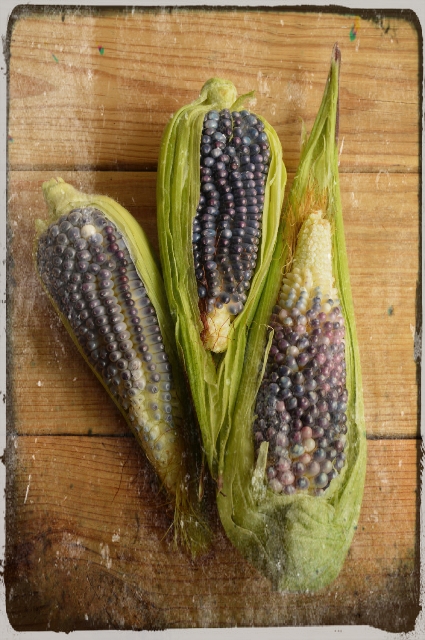
    Blue corn is the most magickal one.

    In Americas corn was a popular choice for god/goddess worship. It symbolized life, fertility, eternity and resurrection. Blue corn is considered to be the most magickal, most sacred form of corn.

    Blue corn is the most potent magickally - EnrapturedbyMagick

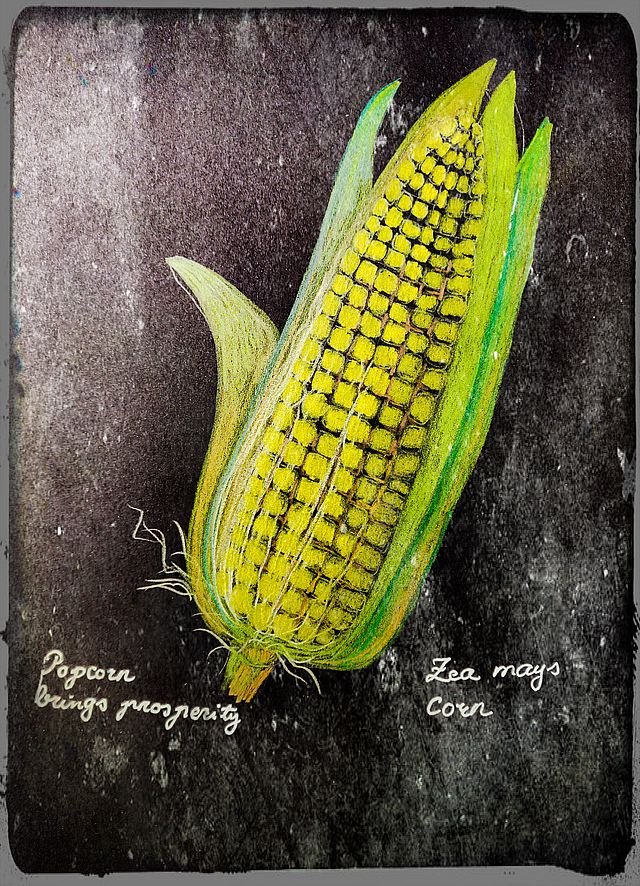
    An easy spell is to make popcorn and say aloud your romantic wishes as the corn pops. This goes also for money wishes…

    If you want more prosperity, add corn cobs to your next shopping list. Yellow corn eaten on the summer solstice will grant your wish. This year the summer solstice takes place on the 21st June in the Northern Hemisphere.

    Eat yellow corn on summer solstice to make your wish true - EnrapturedbyMagick

    Hang out red corn above your door at harvest time to protect your earnings from jobs carried out. An especially scary Jack-o-lantern may help too.

    Susan

  • Pelargonium – Protection, Love and Inner Growth

    Pelargonium – Protection, Love and Inner Growth

    Pelargonium is a common summer flower at many (some may think too many) households. But it should not be overlooked because of its mundane popularity. Pelargoniums have magickal properties too.

    There is an endless variety of different pelargonium species – about 200 in total. They are perennial and will grow into bush size in their natural habitats in South Africa. They tolerate heat and drought well, but shy away from frost. Pelargonium is easy to grow and propagate, thus its success is no wonder.

    There are 200 species of pelargoniums.

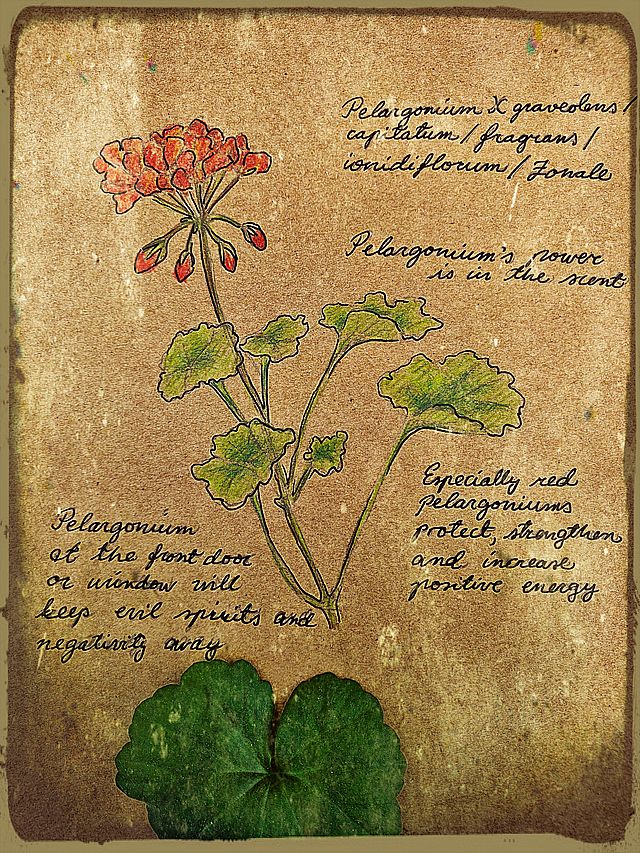
    Anyone interested in the magickal properties of plants, should check the scent of a pelargonium. Its powers are closely connected to its scent and can be used accordingly. Pelargonium’s oil – geranium oil – is said to be a potent protector and it will strengthen any spell.

    If you want to keep evil spirits away, a red pelargonium at the front door or window will work wonders. At a witch’s hut, it may even tell when an unwanted visitor is about to come, by turning to that direction.

    pelargonium has magickal properties

    Geranium oil is said to be good for increasing positivity. You can make the oil from the flower and leaves by distilling. Leaves from scented pelargoniums (pelargonium fragrans) can also be used to flavour desserts and jams, or brewed for tea. There are many different scents available from spearmint to lemon. Only use organic pelargoniums for food or magickal purposes.

    Susan

  • Winter Solstice and Yuletide

    Winter Solstice and Yuletide

    Winter solstice occurs in the Northern Hemisphere today, the 21st December. This day we have the shortest day and longest night of the whole year. From tomorrow on, the day will again gain length.

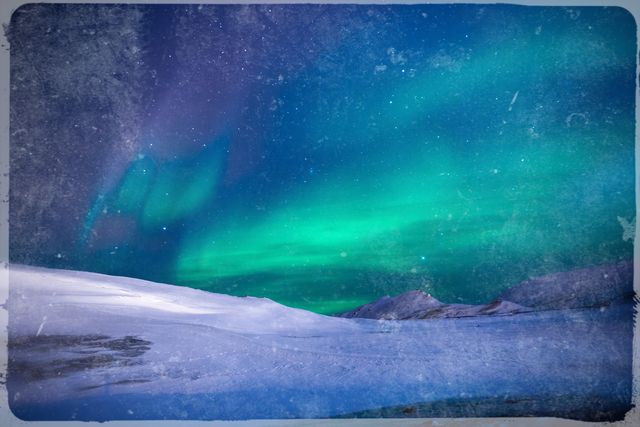
    Yuletide Northern Lights
    Aurora borealis

    Yet, as the spring is on its way, we’re preparing the other Midwinter fest – Yule. Yuletide has a long tradition in the Northern Europe dating back to Viking times. Vikings celebrated the god Odin (who is described as having a long beard) as the Yule father. The celebrations included drinking toasts and making sacrifices for Odin, Njöror and Freyr, for good harvest and for peace. The sacrifices included e.g. pigs, which has carried on to this day in the form of Yule ham.


    Yuletide has also been known as the time of the Wild Hunt, which is led by Odin (also called Jolnir). It is a time of increased supernatural activity and an increased activity of draugar – undead beings walking the earth.

    Many of the common Christmas traditions of today have their roots in the old pagan ways. Santa Claus, reindeer, wreaths, mistletoe and lights all date from prehistoric times. Our time is but a layer on history’s build up.

    Have a Magickal Winter Solstice and Yuletide!

    Susan

  • Halloween/Samhain: The Season of Bats

    Halloween/Samhain: The Season of Bats

    When the nights grow darker and the evenings chillier, you know the autumn festivity season is close. Today it would be difficult to imagine a Halloween decoration without bats, but how did these creatures of the night become associated with day of the ghosts and witches?

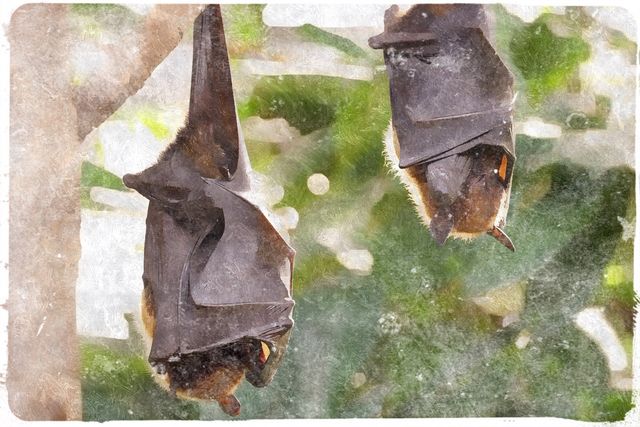
    Bats

    In the Northern Hemisphere Halloween (celebrated on the 31st October) or Samhain coincides with cooler weather and bats are actually already withdrawing to hibernation. This hasn’t prevented them to be the essential decoration item for these autumn festivities.

    Bats’ notoriety perhaps started in the Middle Ages, when they were considered to carry diseases and they were also thought to be the familiars of witches. As nocturnal animals they were an easy target, as little was known about bats. Bats were considered to be messengers between witches and the devil. It was also widely believed that witches could transform into bats.

    Bats = Vampires?

    Fuel was added to the fire when Bram Stoker wrote his novel Dracula and the vampire craze set its first baby steps in the world. Vampire bats do indeed drink blood of their prey, but they do not suck it out – they make a small incision with their sharp teeth and lap the few drops of blood produced with their tongue. Vampire bats are tiny, thus they’re not able to drain blood completely from their prey.

    Symbols of Luck

    Despite the sinister views the European cultures have had on bats, the other peoples of the world have had differing views. In the Asia bats are often considered lucky things and in China, if you see five bats in a group, it brings you five-fold blessing: wealth, long life, health, happy life and a peaceful death. The Chinese are not far from the truth – a group of bats living near you is a lucky sign in many ways. Bats consume huge amounts of insects and thus keep i.e. mosquitoes at bay. They also help pollinate flowering plants and fruit and their droppings – guano – is excellent organic fertilizer.

    Bats in Spells

    Bats have been often used in witchcraft. Their body parts or blood were ingredients in love potions as well as the flying ointment of the witches. A modern-day witch would probably reach for more humane ways to benefit from the magical forces of bats.

    If you’d like to have bat energy around you, build them a bat house on your property to attract bats to live in the area. Then call upon their help to gain intuitive strength and clarity, better communication skills or ask them to carry a message for you.

    If you happen to find a dead bat, dry it out and clean it profoundly and then use its wings to make a powder to keep malevolent spirits out of your house and the bones as amulets to bring good luck.

    Have a very batty Halloween/Samhain!

    Susan

  • Giants and other big creatures in the North

    Giants and other big creatures in the North

    The Finnish mythology has a plethora of larger creatures. Giants have been very popular in folklore all over the country. These huge man-like beings are never seen, but their works are very visible. The ancient Finns believed that giants populated our country before Finns arrived to the North. The hills, ravines and lonely, large rocks in the middle of meadows are the traces giants left behind.

    large rocks

    Contrary to rest of the world, the Finnish giants were not considered dumb or slow, just ordinary, like the rest of us. They had families, they were farmers or had other jobs.

    Antero Vipunen

    One of the best-known giants in Finland is Antero Vipunen. He protected deep knowledge and magic. He was buried underground, but had the knowledge of valuable spells. In Kalevala, when Väinämöinen needs some spellwords, he goes to Vipunen and wakes him up by pushing sharp stakes through him.

    Sons and Daughters of Kaleva

    Stories of giants were much more popular in Eastern Finland, than in Western Finland. And that’s quite reasonable, because Western Finland was populated by the sons and daughters of Kaleva. They were very strong, like giants, and especially skilful at ploughing. Besides Western Finland, the sons and daughters of Kaleva were very well known in Kainuu, in the North-Eastern Finland. These huge folks of Kainuu were familiar even to the other Scandinavian people. There are also Anglo-Saxon legends from the 6th century telling about a leader called Gaelic, who ruled over the Finns. The sons of this king included Väinämöinen, Ilmarinen, Soini, Hiisi and Kihouskovainen, familiar names from Kalevala, the national epic tale of Finland.

    It was told that the 12 sons of Kaleva built stone castles and sailed all the way to Sweden and even conquered parts of Russia. In fact the modern studies have shown that there has been a rare gene mutation in Kainuu, which causes excessive growth.

    Giants and sons and daughters of Kaleva were not the only large folks in Finland. The Northern Finland was populated by Jotulis (alternative spelling Jatulis). They built labyrinths from stones. In the Lapland lived Staalos, who were man-like, but much taller. They could even have children with humans. Staalos were fierce, human hunting monsters, but they were also very rich.

    Kalevipoeg

    Our Baltic neighbours, the Estonians, have Kalevipoeg, which means the son of Kalevi. In other words, it seems to be of the same family as the Finnish Kaleva’s sons and daughters. Perhaps the youngest son remained in Estonia after a raiding trip to Russia? Who knows, but Kalevipoeg was not very lucky, as he ended up to be the guard of the gates of the Hell.

    Susan

    P.S. There is an excellent new book on the Finnish mythology, which I’ve used in creating this post. It’s called Suomalaiset taruolennot by Eero Ojanen & Sirkku Linnea.

  • Flower Food

    Flower Food

    Flowers are the food of fairies. Indeed, edible flowers offer extremely light diet, but also the looks of butterflies and fairytales. What a better nutrition for a fairylife!

    Flowers have been eaten since the ancient times. In the Bronze Age, dandelions were mixed to stews. Nowadays flowers are part of the recipes of top notch restaurants around the world. Even the corner stores carry edible squash and violet flowers during the season.

    Traditionally flowers have been used to create beauty (as accessories or in cosmetics), in foods (as decoration, to create flavour or because of their chemical attributes), to carry wordless messages, in religious rituals and to medical purposes. But, in addition to these uses, flowers have always been used for their magical properties too.

    Three Magical Flowers in Your Backyard
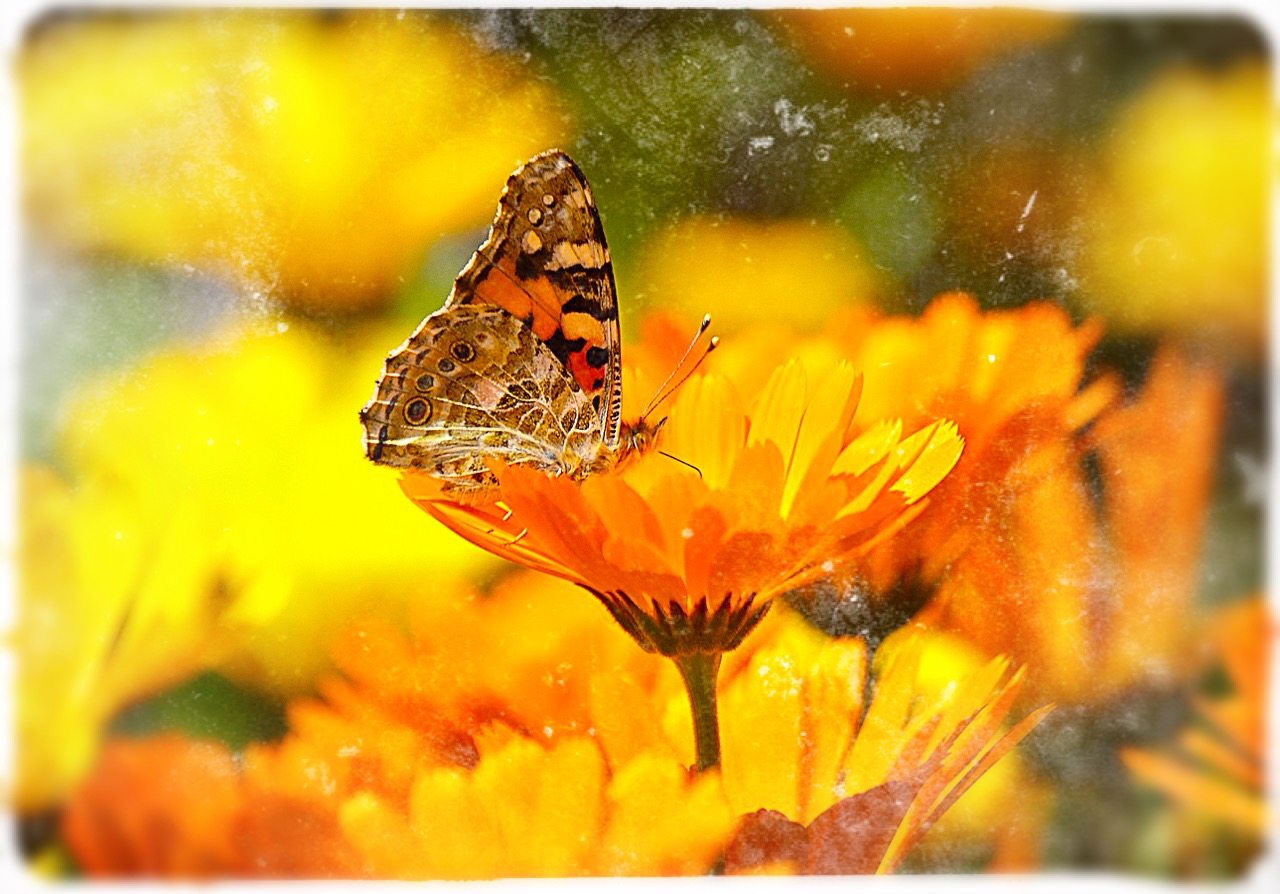
    Marigolds

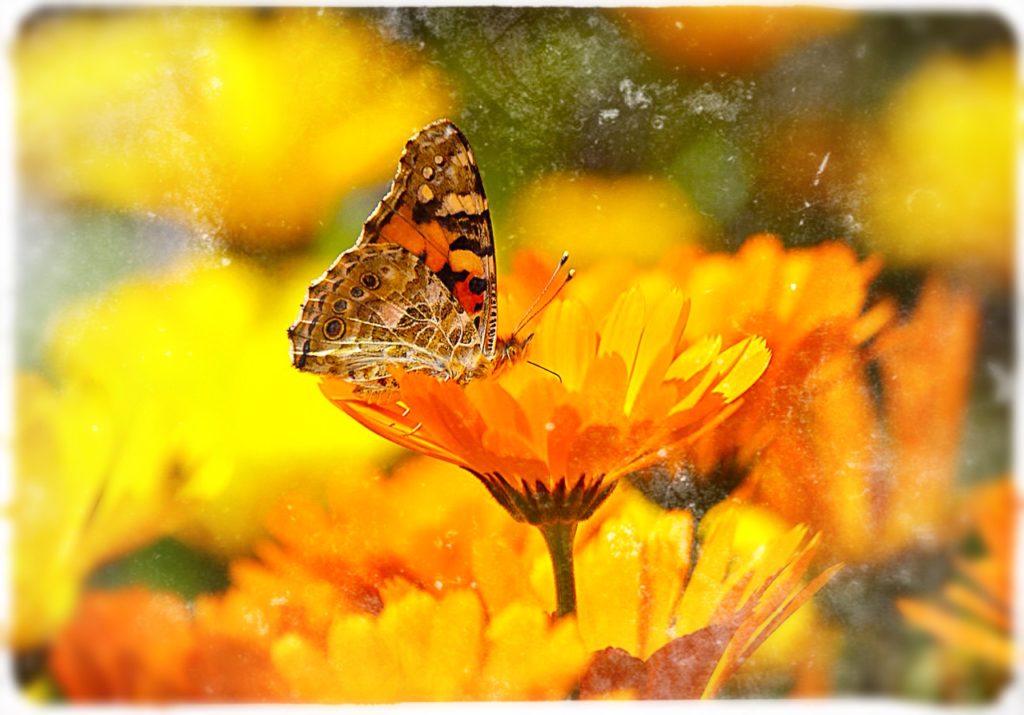
    Marigold (Calendula officinalis) is one of the best known edible flowers with plenty of magical uses as well. Marigold is one of the nine sacred herbs of Lughnasad. It is also popular in divination: its petals can be mixed with water or oil used in divination. Incense used for reading Tarot cards includes one part marigold, one part Arabic gum and lots of lavender. If you rub marigold to your eye lids, especially together with meadowsweet and thyme, you’ll have a chance to see fairies. Marigold is also said to be excellent in banishing demons and as an amulet. Marigold garland on the door will keep evil away.

    Love and magic have always gone together as far as love potions are considered. Marigold tea and colourful petals in food increase happiness. It is also effective as a salve for treating all kinds of skin problems. Be careful though before using marigold internally. It contains estrogen and should not be used while pregnant or breastfeeding. If you have pollen allergies, try it first with caution.
    Yarrow

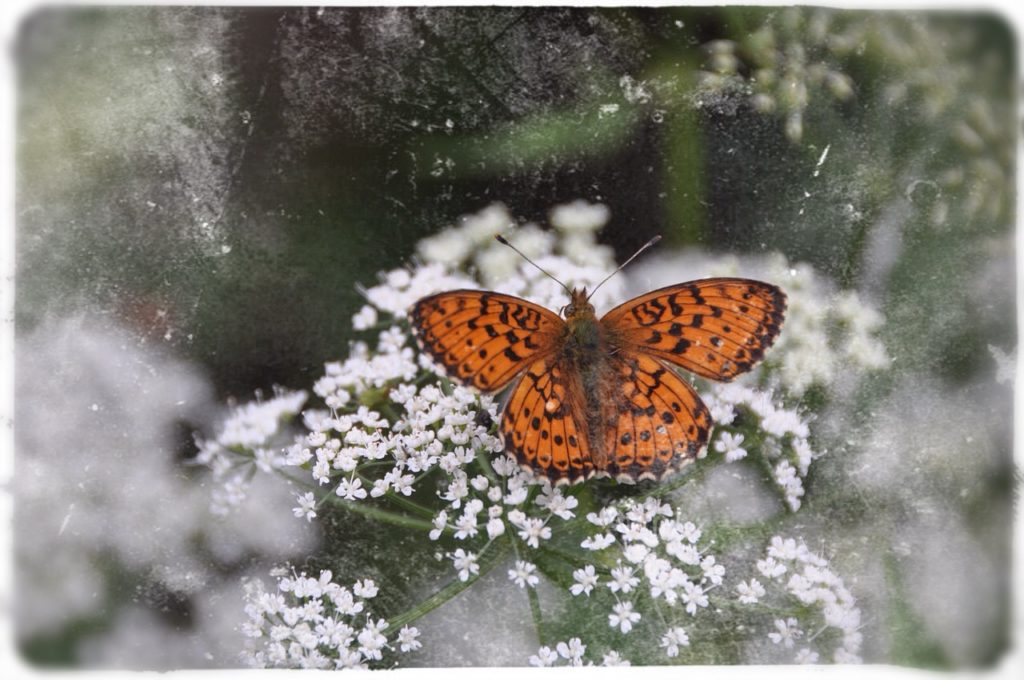
    If you have a garden, you’ve probably come across with yarrow (Achillea millefolium). This originally European wildflower has spread all around the world. Yarrow has been part of the human life for tens of thousands of years.

    The legend says that Achilles’ mother made her son invulnerable by holding him at night in the fire of the sky and by healing him in the morning with ambrosia. Only the heels were left weak, as Achilles’ mother held him by his heels. As a young soldier, Achilles was a student of Keiros and learnt how to use herbs in healing. In the Trojan war Achilles staunched bleeding of his soldier mates with yarrow. In the Roman army, all soldiers were ordered to carry “millefoil soldier’s gras” with them for wounds, thus the name herba militaris. It is even said that when Joseph hurt himself in carpentry work, Jesus used yarrow to staunch bleeding.

    After all this legendary fame, it is no wonder that yarrow was an integral part of the medieval herb gardens. It is one of the nine wild herbs eaten at spring time. After having ate yarrow soup or yarrow pancakes, a person is connected with the greenery and revival of the nature.

    Yarrow is a favourite herb of witches and sacred to the Horned God of Wicca. It can be used in all incenses and as tea. It is also one of the nine sacred herbs of Lunghnasad. Yarrow is used in divination and in love magic, but it has also protective properties. Yarrow in the wedding bouquet guarantees happiness at least for seven years – hence the name seven year’s love.

    Yarrow in the magic pouch brings courage, banishes negativity and increases awareness and love. If you add nettle, your fears will fade away.

    Take care with internal use: allergic persons can get a rash from touching the plant. Yarrow contains tujon, which causes miscarriage.
    Dandelion

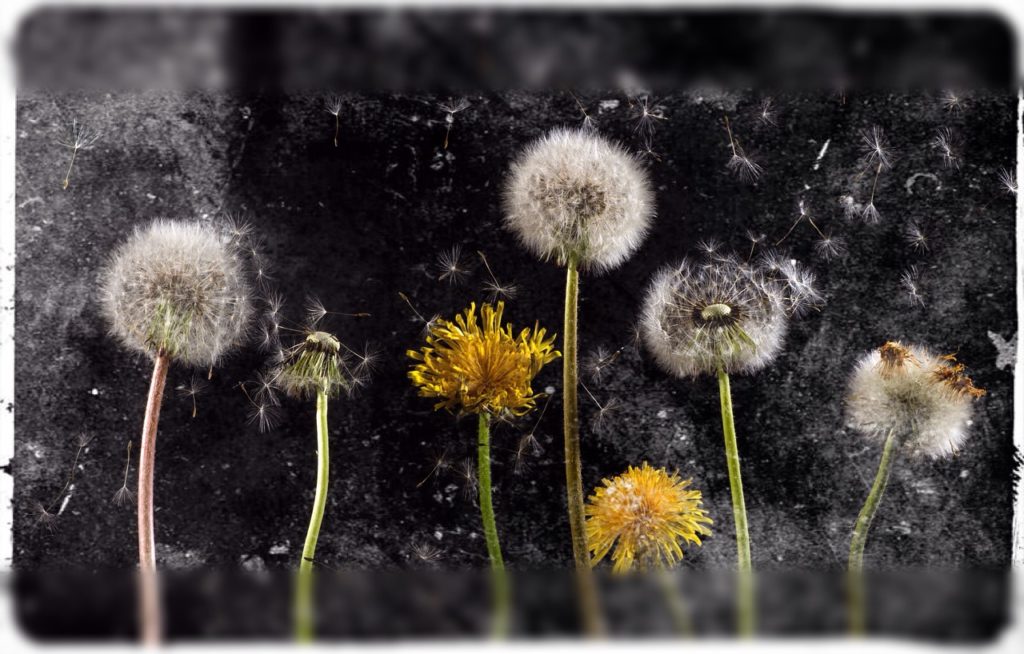
    Third staple of the flower world is dandelion (Taraxacum). A weed cursed by many gardeners, it is also a valued herb and an edible plant. It can be eaten in a salad or its buds used to make mead. If you want to enhance your ability to interpret dreams, fill your pillow with dandelion flowers. Steaming dandelion tea on the bedside table before you go to sleep will call in spirits.

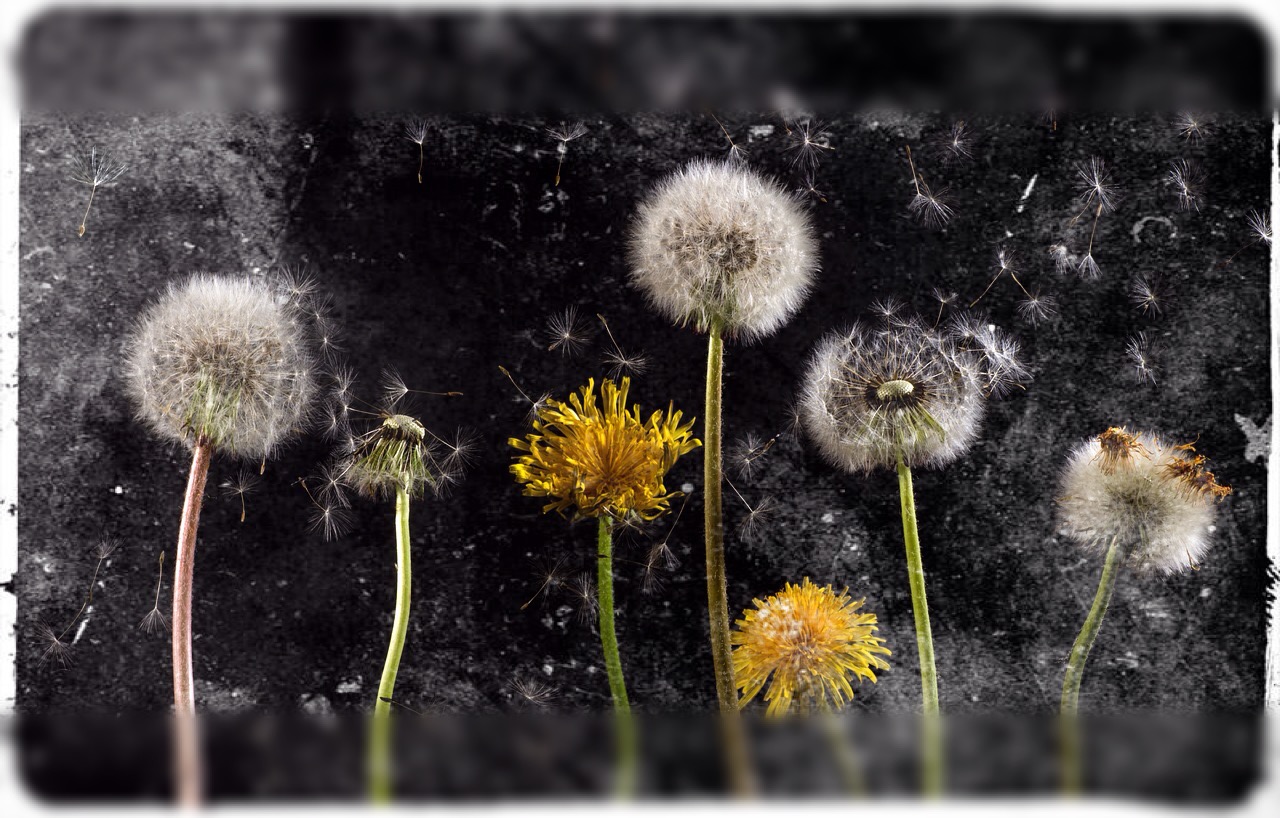
    Pick a dandelion blowball on a full moon night and blow the seeds to four directions and your wishes will come true. If you can blow all seeds at once, you’ll have the same result. And your love is passionate. If there are a few seeds left, your relationship will be unfaithful, if there are plenty of seeds left, there is indifference. Better think through whether you want to try blowing all seeds at once or not…

    A dandelion picked on Midsummer will protect from witchcraft.

    Word of caution: dandelions are not recommended for those allergic to them. Don’t pick flowers from polluted places. It strengthens the diuretic effects of other plants and it may disturb sugar metabolism. Don’t use it if you have gall problems or bowel

    Susan
  • Butterflies – the Magick of Summer

    Butterflies – the Magick of Summer

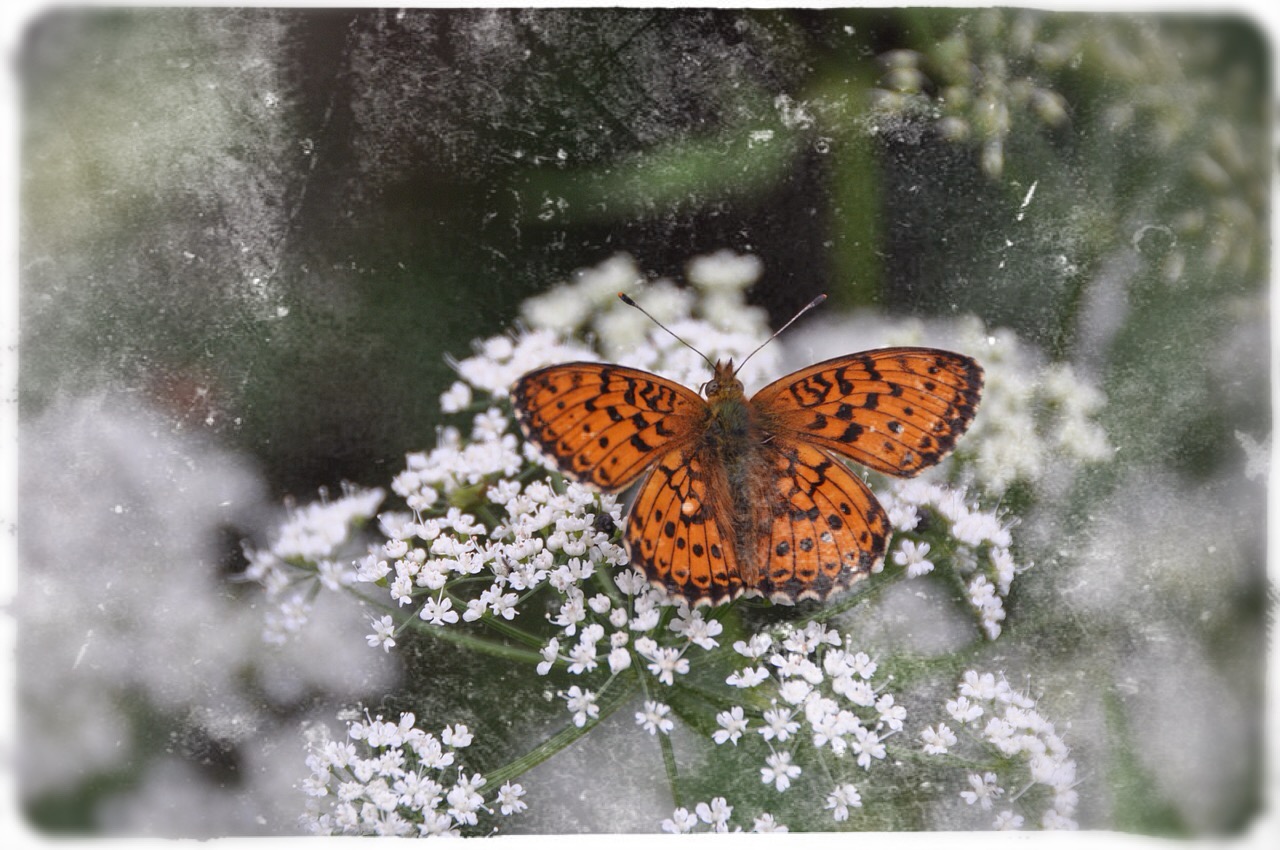
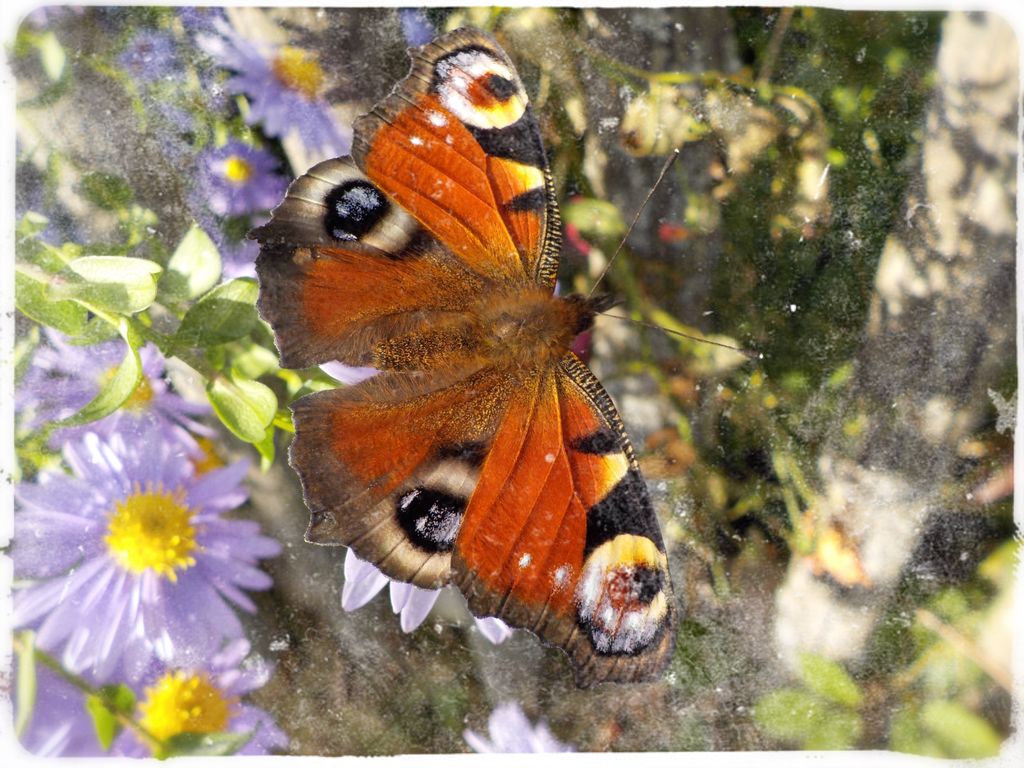
    Butterflies, the fairies of our gardens, are quite magical creatures all on their own. Their ethereal being has intrigued and inspired people through the ages, not to mention their life cycle of transformations. For the Minoans of the Ancient Greece, labyris, the double axe, was the symbol of the Goddess as a butterfly. Butterfly’s three stages of life symbolized the cycle of life, death and rebirth or resurrection.

    Perhaps the best-known butterfly lore comes from the classical Greece. Psyche was the goddess of the soul and the wife of Eros, the god of love. She was born as a mortal princess, whose beauty stole attention from Aphrodite. Aphrodite commanded Eros to make her fall in love with hideous men, but Eros fell in love with her himself. Psyche was depicted as a beautiful woman with butterfly wings.

    Fairies and butterflies have the most eerie similarity and thus butterflies have often been considered to be fairies in disguise. The fickle nature of the butterflies seems appropriate to the nature of the fairies, who are said to enjoy doing pranks to people. However, the winged appearance of fairies is rather a recent phenomenon. In folklore, fairies didn’t have wings. They flew on their own or using plant parts, like ragwort stems, or birds as their flying vehicles.

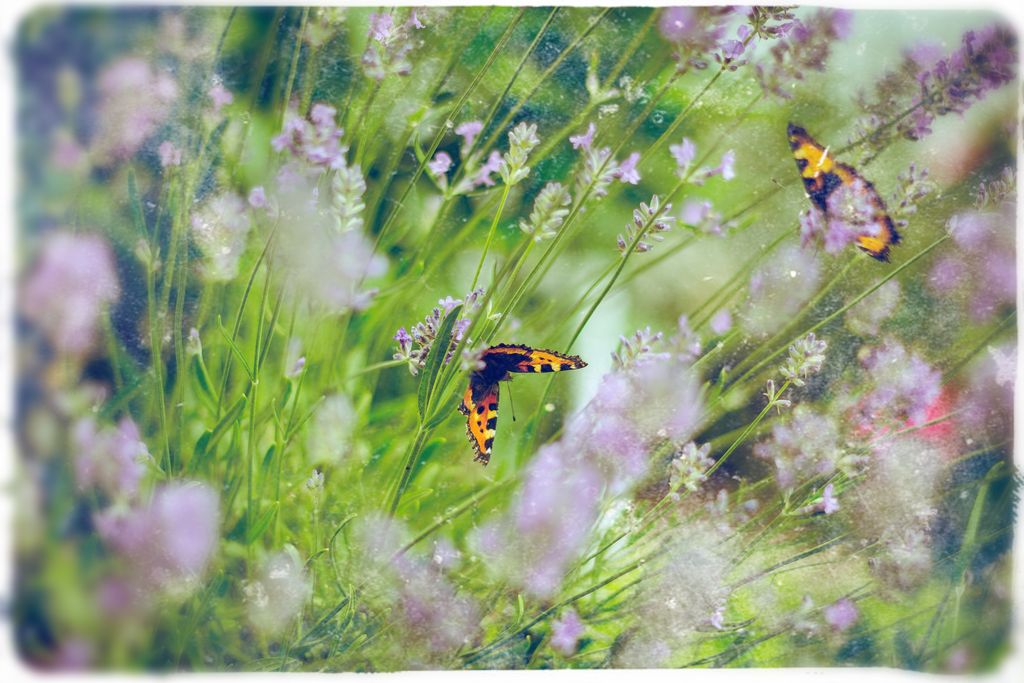
    Butterfly on a flower

    No matter what the true nature of the butterflies is, they are a delight in the garden. If you want to attract them to your own garden, there are several ways to do it. The first and most obvious is to plant butterfly enticing plants.

    The next step is to put up a butterfly bar ( link in Finnish) I tried to find some links in English on this, but couldn’t find any – perhaps this is a Finnish invention? Anyway, the idea is to offer butterflies nectar they can’t resist. The blogger behind the link tested for different mixes and found out that red wine + syrup was the winning combination. She also suggests you make at least one litre of it right away. Put it in a jar and stick a sponge in it so that it absorbs the liquid and the butterflies can reach it safely on the surface. It’s best to place the jar somewhere quiet, because it will also entice wasps. A warm, wind protected spot would be nice. Then just enjoy watching butterflies – and perhaps even fairies…

    Susan


    Butterflies

  • Midsummer – When Sun Never Sets

    Midsummer – When Sun Never Sets

    Midsummer is the culmination of the northern summer. It might be only the beginning of the season in some warmer climates, but up north, it is the peak of summer. This is due to the summer solstice – the day is longest on the 21st June. Midsummer has also always considered one of the most propitious times for magic.

    In Finland Midsummer festivities include a bonfire, grilled food and strawberry deserts, but also plenty of magical traditions.

    The ancient people in England set up Maypoles and danced around them, which is still a common custom in Sweden (did this tradition come to England with Vikings?), but not in Finland (except in Swedish speaking areas).

    Love and marriage, anyone?

    The Finnish folklore around Midsummer is firmly concentrated in finding a spouse and divining the future. This is understandable as in the past Midsummer used to be one of the rare holidays during summer season, when young people in the countryside could go and meet each other. Midsummer was also perceived as a celebration of fertility and many of Midsummer’s spells were performed naked. Young maidens would roll naked on the fields either in the midnight or when there still was dew to see their future husband in a vision.

    A bit easier and more inconspicuous way to see the potential hubby in a dream, is to pick either seven or nine wildflowers in the Midsummer Eve and put them under the pillow. If wildflowers are not available, you can just put your left sock on inside out.

    If you’re going to bath in sauna on Midsummer Eve, you can e.g. walk backwards to a pile of logs. Depending on the log which touches your bottom, you’ll see what kind of a lover you’ll get. If the log has been cut in half, he’ll be married or a widow, if the log is whole, he’ll be yours entirely.

    If you have only a moment to use for magic, take a look at a well, pond or spring in the Midsummer night – preferably naked – and you’ll see your future spouse. In the past Finns sure loved to run around naked, as there are numerous ways to divine the future spouse, provided no clothes are anywhere near. You can e.g. run naked in the ditches around a field of rye and when you reach the ninth ditch your future spouse will meet you. Or you can run around a triangle formed field trice to then meet your future spouse. If these didn’t work, sit naked on a rock in a waterfall, just wearing a straw belt, or sweep up your bedroom floor naked wearing a red ribbon on your waist and the ghost of your future husband will come to see you.

    If you want to ensure strong magical powers, Midsummer provides you with a unique opportunity. It is the only night in the year, when there’s a chance to see a fern blossoming. If you’d be so lucky as to witness this miracle, you should pick the flower without hesitation. It will bring unprecedented magical powers for its holder. While you’re in the forest looking for the flowers of the ferns, keep an eye for a will-o’-the-wisp or ignis fatuus (in Medieval Latin). Underneath it you can find a treasure.

    Have a Magical Midsummer!

    Susan

    Midsummer Magick